
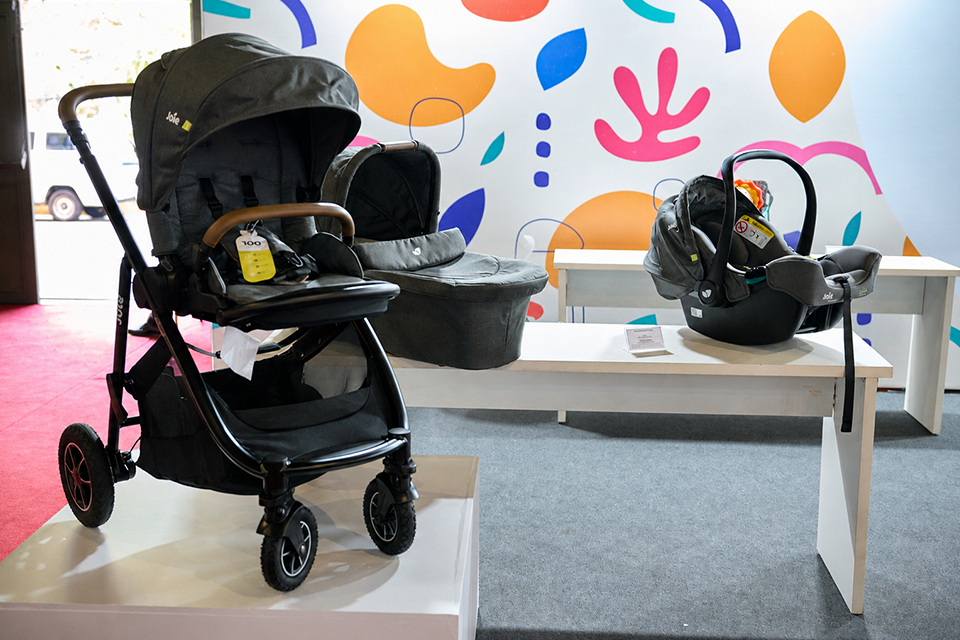
The idea of buying a product for one specific stage of childhood is increasingly being complemented by solutions designed to adapt to a child’s development over time. In the juvenile products market, this shift can be seen across strollers, high chairs, cribs, furniture, accessories and even clothing that can be adjusted as children grow.
The search for longer-lasting products is also changing the way these items are developed and presented to the market. A piece designed to adapt as a child grows can represent a more attractive investment, take up less space at home and reduce the need for frequent replacements. This trend puts durability, practicality and adaptability among the qualities worth considering when developing children’s products, and they can make a real difference to a brand’s business.
Products that grow with children find a favorable market in the juvenile products sector
Brazil’s juvenile products market is showing positive momentum, according to recent data from Circana. The consulting firm’s retail panel, launched in November 2025, recorded average double-digit growth across the sector over the three years covered. Between November 2024 and October 2025, revenue increased by 10% compared with the previous period, while unit sales rose by 9%, with average prices remaining stable.
Mobility-related categories are among the strongest performers. Travel products, which include strollers and car seats, grew by 14%, while mobility furniture, such as high chairs and travel cribs, increased by 23%. These are precisely the categories where adaptability, ergonomics and extended use can add value to a product and create new ways for brands to stand out in retail.
In a market where sales are already rising, innovation can lie in the way each product responds to the needs that emerge throughout childhood. A stroller that adapts as the child grows, a crib that changes configuration over time or a high chair that remains useful beyond the feeding stage can offer a more complete value proposition, considering price, design and the overall user experience. This creates room for brands that can turn an everyday need into a product with greater perceived value.
There is also an opportunity to build a richer commercial story around these products. Rather than focusing only on an item’s immediate function, brands can show how it fits into everyday life for months or even years, what adjustments it offers and why it can remain relevant over time. In categories with strong demand, this type of differentiation can influence the choices of buyers and retailers looking for products that stand out at the point of sale.
Multifunctionality in juvenile products is transforming familiar categories
This shift becomes easier to see when established categories are placed side by side with the new products entering the market. A single product can incorporate new functions and respond to needs that emerge during childhood, creating new possibilities within established categories.
| How multifunctionality looks in practice | ||
| Category | Traditional approach | Multifunctional evolution |
| Crib | Primarily used during the child’s early years | Starts as a mini crib, becomes a crib and toddler bed, and can later be transformed into two small armchairs |
| High chair | Primarily used for meals during early childhood | High chair that converts into a regular chair |
| Stroller | Designed for a specific stage | Evolves from a push-along model with foot support into a model that allows the child to pedal independently |
| Postural support system | More limited adjustment options as the child grows | Seat, recline and footrest can be adjusted as the child grows |
| Maternity bag | Mainly focused on the baby’s first months | Multiple compartments and organizers that remain useful at other stages of childhood |
| Hygiene kit | Primarily designed for baby care | Items designed to remain useful throughout the child’s routine |
| Children’s clothing | Cut and sized for a specific age or size | Adjustable pieces designed to extend the period of use |
Technology is also beginning to play an interesting role in these products, particularly when it enables more precise adjustments and a more personalized user experience. Postural support systems with adjustable seats, recline and footrests, for example, require careful engineering to adapt to changes in a child’s body without compromising comfort, safety or practicality.
The same concept can also be found in categories that are not traditionally associated with adaptability. Maternity bags with multiple organizational compartments can remain useful beyond the first few months, while hygiene kits designed for later stages of childhood can reduce the need to replace an entire set as the routine changes. In clothing, adjustable designs allow the same piece to be used for longer.
Adaptability brings new challenges to product development
Creating a multifunctional product involves far more complex decisions than simply combining several functions within the same structure. When an item is designed for multiple uses, each configuration needs to maintain the same standards of safety, stability and comfort. A high chair designed to accommodate children across several age groups, for example, needs to remain safe in every configuration, while a stroller must maintain its strength and balance as new uses are introduced.
Safety standards also carry significant weight in this equation. The greater the number of functions, the wider the range of use cases that the design may need to address. Every transformation, adjustment or new configuration must be assessed against the requirements that apply to that specific use, making research, testing and validation critical steps before a product reaches the market.
Material selection follows the same principle. An item designed to be used for several years will go through far more cycles of use, cleaning, assembly, adjustment and movement. Highly durable wood, washable technical fabrics and plastics designed to withstand intensive use can contribute to longevity, but they can also increase development and manufacturing costs. There is also the challenge of balancing durability and price so that the product remains competitive at retail.
Price is another consideration, since a more durable product may require a higher initial investment. The equation changes, however, when consumers consider how many additional purchases they may avoid over the years.
How the industry is adapting product development
Smart design is becoming increasingly important in product development, with adaptive mechanisms, modular structures and material choices that combine durability, safety and practicality. Technology also plays a role, particularly when it allows for more precise adjustments and configurations that adapt to a child’s needs as they grow.
This evolution can be seen firsthand at industry trade shows, where new launches can offer an early glimpse into what may soon reach the retail market. At FIT Pueri Expo 2026, companies presented products designed to accompany children from birth through more advanced stages, combining multiple functions within a single structure and reducing the need for early replacement. These products caught the attention of buyers looking for new additions to their portfolios and showed that multifunctionality is already becoming part of some brands’ product development strategies.
For professionals following the juvenile products market, keeping an eye on these developments can help identify new ways for brands to differentiate themselves. Well-designed products can provide a more complete user experience, make everyday life easier for families and create stronger commercial arguments beyond price and aesthetics.
FIT Pueri Expo, Brazil’s largest trade show for the children’s market, brings together manufacturers, brands, buyers, retailers and professionals in an environment focused on new products, business opportunities and connections across the industry. It is a place to discover what is being developed, follow emerging market trends and find inspiration for future launches.
Does your brand already develop, or plan to produce, products designed to grow with children? Take part in the next edition of FIT Pueri Expo and put your brand at the center of these new opportunities. Click HERE to learn more.