
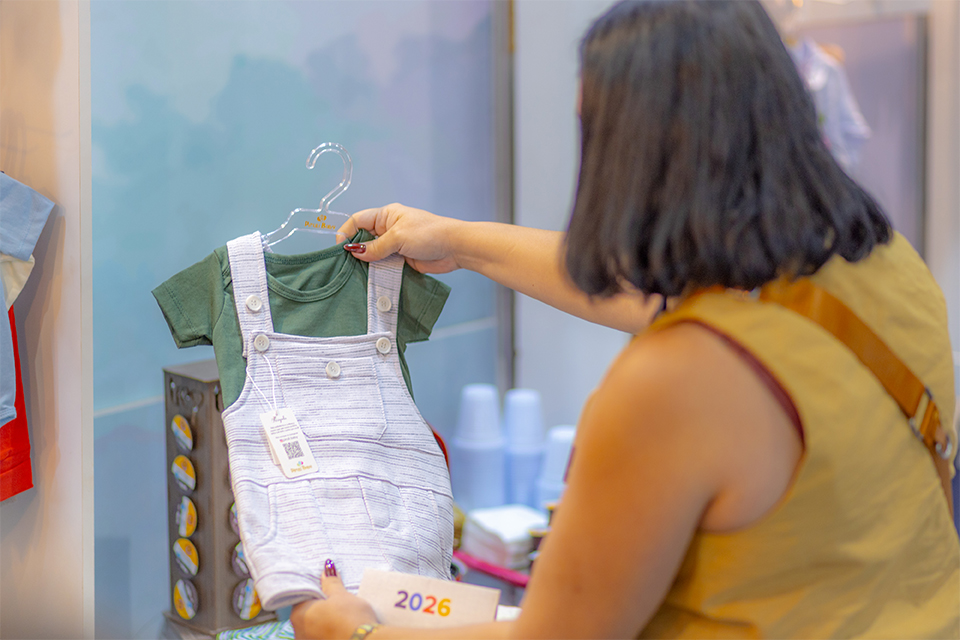
Operating in the children’s segment means understanding how children and caregivers interact with products in everyday life, especially when comfort, safety, and functionality guide purchasing decisions. The children’s market in Brazil is shaped by a demanding audience that looks beyond aesthetics and prioritizes quality for daily use, suitability for children’s bodies, and reliability. This scenario represents a real opportunity to develop products that meet these needs by combining creativity and innovation.
Within this dynamic, the Brazilian children’s textile sector stands out as a robust market, with steady growth and significant impact on the production chain and purchasing decisions. According to IEMI studies, children’s fashion revenue reached BRL 31.2 billion in 2023, representing a 3.4% increase in nominal terms. The sector also encompasses 5,900 production units, reflecting a 7% increase in the number of companies compared to the previous year. These figures indicate room for innovation that goes beyond style or trends.
Functionality as a Decision-Making Criterion in the Children’s Market
One of the main challenges for the textile industry is developing products that simplify daily life for both children and parents. IEMI’s analysis of children’s and babywear production shows that casual-style garments accounted for more than half of total production in 2023. Casual wear, sportswear, socks, and sleepwear dominate the market, opening space for comfort-oriented pieces in brand portfolios.
Children are constantly on the move, exploring, playing, and learning. Clothing that restricts movement or causes discomfort quickly becomes unpopular. For this reason, fabrics with good elasticity, durability, and lightness are essential. A practical example is the development of children’s garments made with tricoline, a lightweight and breathable fabric that adapts well to the body without generating excessive heat. In children’s product development, fabric selection plays a key role in delivering comfort and functionality. Lightweight, breathable materials that adapt well to the child’s body and retain less heat tend to perform better in daily use, especially in garments designed for play and extended periods of movement.
According to further industry research, the most common complaints among children include restricted movement and skin irritation. This diagnosis reveals opportunities for the textile industry to innovate by offering solutions that combine aesthetics with practicality. Smart seams and ergonomic adjustments are trends that can increase product acceptance in the market.
Comfort as a Product Performance Parameter
Comfort is one of the main factors influencing purchasing decisions. Surveys conducted by the Brazilian Textile and Apparel Industry Association (ABIT) indicate that, beyond aesthetics, parents and caregivers prioritize clothing that does not irritate the skin, allows for easy changes, and provides freedom of movement. The use of materials such as organic cotton, lightweight knits, and breathable blended fibers has grown significantly, particularly because they reduce the risk of allergies and discomfort during daily use.
This demand is directly reflected in production volume. More than one billion children’s garments were produced in 2022, most of them intended for everyday use. This figure reinforces that investing in fabrics with a soft touch, adequate ventilation, and elasticity is a strategy aligned with market scale and value generation.
An illustrative case involves a brand that combined aesthetics and comfort in its children’s collection after identifying a recurring issue, such as limited movement during playtime. By turning this pain point into an opportunity, the brand invested in fabrics that do not retain heat, adapt well to the body, and allow mobility without compression. The result was a collection that blends playful prints, stimulation of children’s imagination, and consistent functional performance, positioning the product with a clear competitive edge and strong market acceptance.
Safety Applied to Children’s Textiles
Safety is another pillar of the children’s market that cannot be overlooked. Children’s textiles in Brazil must comply with strict quality standards, with careful attention to material composition, garment durability, and the absence of elements that may pose risks to children. ABNT regulations for children’s products establish clear parameters that guide the industry and reinforce confidence in products offered to the market.
This focus on safety also drives the development of new solutions. Hypoallergenic fabrics, reinforced seams, non-irritating labels, and protected zippers demonstrate how technical criteria can add value to products. In addition, specific applications such as garments with reflective elements or fabrics with flame-retardant properties expand the industry’s scope of action.
When incorporated from the development stage, these technical solutions go beyond being simple product attributes and begin to directly influence commercial performance throughout the value chain. Check below:
| Development Stage | Textile Technical Focus | Direct Market Impact |
| Material selection | Fabrics that maintain performance after frequent washing | Reduced returns and greater perceived durability |
| Garment design | Ergonomic adjustments and child-adapted patternmaking | Higher acceptance in daily use and repeat purchases |
| Finishing and details | Reinforced seams, soft labels, and protected trims | Fewer complaints and returns |
| Technical compliance | Adherence to standards and regulatory requirements | Easier access to retail and buyer confidence |
| Production scale | Materials with consistent quality and industrial feasibility | Cost control and margin improvement |
| Point-of-sale experience | Clearly communicable technical differentiators | Product value enhancement and purchase decision support |
New Areas of Opportunity in the Children’s Market
The children’s fashion market in Brazil grows at an average rate of 6% to 8% per year, according to ABIT data. This movement extends beyond fashion and reaches segments focused on meeting children’s specific needs. With more than 5,900 production units and increasing revenue, the textile industry has room to expand, launch specialized lines, and create products that solve everyday challenges in children’s lives.
In addition, new brands and entrepreneurs are finding opportunities by focusing on practical solutions designed for real-life use by children. Fabrics that facilitate hygiene, modular clothing, or garments that combine practicality with playful appeal represent niches that are still expanding and have a direct impact on portfolio differentiation. Investing in research, material development, and performance-oriented design helps strengthen competitiveness and generate consistent revenue growth.
Within this environment of growth and transformation, Fit Pueri Expo emerges as a relevant platform for the textile industry and professionals operating in the children’s market. The event brings together manufacturers, suppliers, and purchasing decision-makers in a space dedicated to information exchange, solution presentation, and the generation of insights applicable to product development.
By concentrating usage trends, real market demands, and business opportunities, Fit Pueri Expo provides concrete conditions to strengthen positioning, identify competitive differentiators, and transform knowledge into commercial growth.
Want to be part of this movement? Connect your industry to the real demands of the children’s market. Learn how to participate in Fit Pueri Expo HERE.