
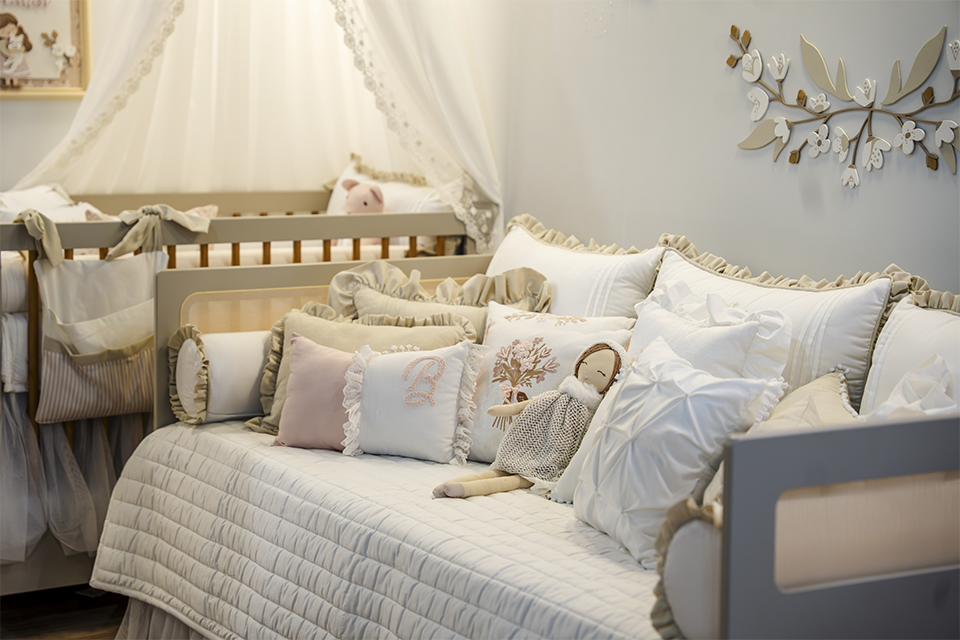
Step into a child’s bedroom today and you are likely to find solutions that look very different from those that once defined these spaces. A bed might start close to the floor and, a few years later, be raised to a standard height. A table can be adjusted as its young user grows. Shelves stay within easy reach, while modular pieces can be rearranged as the family’s routine changes.
Children’s furniture is increasingly being designed around a stage of life shaped by discovery, with independence, safety, functionality and longer use built into the very concept of each piece.
This shift is creating new opportunities in a growing sector. Rethinking shapes, materials and functions is paving the way for solutions that suit different stages of childhood and remain useful at home for longer.
Children’s furniture is embracing the child’s perspective
The Montessori bedroom helped popularize a simple idea: designing a space around the height and needs of the person who will actually use it. Instead of relying on an adult to reach a book, pick out clothes or get into bed, children can access many of these elements themselves and take a more independent role in their daily routines.
Rooted in Maria Montessori’s principles, this approach places autonomy at the heart of how the environment is organized. Studies on Montessori education associate child-sized furniture and accessible objects with greater initiative and exploration, bringing the child’s perspective into decisions ranging from the height of a shelf to the overall layout of the bedroom.
According to For Insights Consultancy, the global children’s furniture market, valued at US$53.34 billion in 2025, is expected to reach US$198.62 billion by 2034, growing at an average annual rate of 18.6% and reinforcing the potential of this category in the years ahead.
This perspective can now be seen in low beds, easy-to-reach clothing racks, child-sized tables and storage solutions designed for everyday accessibility. Ergonomics and functionality come together with aesthetics to create spaces that respond more naturally to children’s movements, habits and needs at each stage of childhood.
Adaptable furniture brings new possibilities to the product portfolio
With adaptable furniture, the piece itself changes when its original function no longer meets the child’s needs. Adjustments in height, configuration and purpose extend the usefulness of a single item, an approach already seen across different types of furniture:
- Convertible cribs: can become toddler beds, children’s beds and, in some models, even sofas or small desks.
- Adaptable beds: feature adjustable heights or lengths to accommodate more than one stage of childhood.
- Adjustable tables and desks: can be raised as the child grows and remain in use throughout the school years.
- Multifunctional changing tables: once their original purpose is no longer needed, they can stay in the bedroom as dressers or storage units.
- Reconfigurable shelving and modular units: can be rearranged to accommodate changing storage needs.
This ability to transform also changes how a purchase is evaluated. Price is no longer the only consideration. The functions a piece can perform, how it can be adapted and how long it will remain useful all become part of the decision.
Looking at the category from other angles, raw materials, age groups and children’s influence on purchasing choices also reveal valuable insights for manufacturers and retailers:
| What the data shows | Figures | What to keep on the radar |
| Wood dominates Brazilian furniture production | 76% of the furniture produced in the country uses wood | Durability, material sourcing and resource efficiency have a direct impact on product development |
| A bedroom serves different stages of childhood | Ages 0 to 14 encompass very different behaviors and needs | Adaptable designs can respond to changing uses throughout childhood |
| Children influence purchasing decisions | 71% of parents and guardians said they would be willing to pay more for a brand requested by their children | Design, functionality and product appeal can influence family purchasing decisions |
Sources: Sebrae Market Intelligence and Sebrae materials on children’s consumer behavior
Safety and sustainability start at the design stage
Giving children greater freedom of movement also calls for greater attention to design. When they can access furniture without constant adult assistance, stability, finishes, ergonomics and installation need to be considered from the outset.
These precautions become even more important when considering household accidents involving children, including falls and furniture tip-overs. In Brazil, cribs, for example, are subject to specific safety and conformity assessment requirements. Inmetro sets out technical standards covering both safety requirements and testing methods for these products. Official guidance on preventing household accidents also recommends securing dressers and cabinets to the wall when there is a risk of tipping.
Meeting these requirements influences how each piece is developed. Creativity and safety can work side by side, whether that means redesigning a corner, incorporating an anchoring system into the structure or replacing certain components with alternatives better suited to children. Each of these decisions reaches the consumer in the form of comfort, practicality and confidence, attributes that can carry significant weight at the time of purchase.
The origin and eventual destination of the materials used in manufacturing deserve attention as well. According to data from Brazil’s National Confederation of Industry (CNI), 85% of Brazilian industrial companies have adopted some form of circular economy practice, an approach based on reducing waste and keeping resources in circulation. In children’s furniture, principles such as reuse, repairability and responsible material sourcing can bring the category closer to this model and create room for products more closely aligned with responsible consumption.
The shift is reaching manufacturers and retailers too
All these characteristics create opportunities in both product development and commercialization. A bed no longer needs to be presented solely in terms of its dimensions and finish. Its ability to transform can become part of the sales proposition. An accessible shelving unit can highlight organization and independence, while an adjustable desk adds ergonomics to the list of selling points.
Versatility can also shape how products are presented to the public. In stores, displaying different configurations shows how a piece might be used two or three years down the road. Online, videos and animations can quickly demonstrate how a particular solution transforms.
Designing a piece that will continue to make sense as a child grows raises other questions during development. Can a worn component be replaced? Can the system accommodate new configurations? Is assembly intuitive? Does the design still work once its original function is no longer needed? The answers can become points of differentiation in a category where aesthetics remain important but share the purchasing decision with attributes tied to everyday use.
Seeing these transformations up close also brings manufacturers, suppliers and retailers into contact with new opportunities for product collections and purchasing decisions. Events that connect different parts of the supply chain create an environment where professionals can compare solutions, exchange experiences and follow the ideas beginning to take shape in children’s furniture.
FIT Pueri Expo brings this ecosystem together in one place. At the next edition, brands and professionals from across the children’s industry will be able to explore launches, trends and new developments that offer a glimpse of what may be coming to stores and children’s bedrooms in the years ahead.
Want to see what’s coming next? Click here to learn more about the next edition of FIT Pueri Expo.